Blog

  • Shani Sade Sati: What It Is and How to Navigate It

    Shani Sade Sati: What It Is and How to Navigate It

    Shani Sade Sati: What It Is and How to Navigate I

    Blog 5: Choosing an Auspicious Muhurat for Weddings, Business and New Beginnings

    Meta description: What is a muhurat in Vedic astrology? Learn how Panchang elements like Tithi, Nakshatra and Lagna are used to pick an auspicious time for weddings, griha pravesh and business launches.

    Keywords: shubh muhurat, auspicious time, wedding muhurat, griha pravesh muhurat, panchang, business opening muhurat

    Indian families have long believed that when you begin something matters as much as what you begin. A muhurat is a carefully chosen window of time that astrologers select so that a new start is supported by favourable planetary and lunar conditions. From weddings to shop openings, choosing a good muhurat is a respected tradition that many people still follow today.

    What is a muhurat?

    The word muhurat refers to a specific period of time, traditionally about 48 minutes. In astrology it means the best available window for an important event, chosen using the Panchang, the Vedic almanac.

    The five elements of the Panchang

    1. Tithi: the lunar day. Some tithis are considered more favourable than others for particular activities.
    2. Vara: the day of the week, each linked to a planet.
    3. Nakshatra: the Moon’s star at that moment. Certain Nakshatras are preferred for weddings, others for starting a business.
    4. Yoga: a combination of Sun and Moon positions that adds its own quality to the time.
    5. Karana: half of a tithi, used to refine the choice.

    Why Lagna and your own chart matter

    A general “good day” is only the starting point. A skilled astrologer also checks the rising sign (Lagna) at the chosen time, the position of key planets, and whether the date suits the individual birth charts involved. A muhurat for one person’s business may not suit another’s, which is why personalised selection works better than copying a date from a calendar.

    Common occasions for a muhurat

    • Vivah (wedding): the most carefully chosen, often combined with Kundli matching.
    • Griha Pravesh (housewarming): entering a new home at a favourable time.
    • Business or shop opening: supporting a confident start to a new venture.
    • Vehicle or property purchase: a symbolic start to a major investment.
    • Naming ceremony and education start: milestones for children.

    Periods usually avoided

    Traditionally, people avoid Rahu Kaal, a daily window ruled by Rahu, for new beginnings. The Pitru Paksha period and certain inauspicious transitions are also avoided for celebrations. Exact timings change by day and location, so always check a local Panchang.

    A practical tip

    Plan early. Auspicious wedding dates are limited each season and venues book up fast. Consult your astrologer a few months ahead so you have several good options to choose from.

    Final thoughts

    A muhurat does not replace preparation, but it brings confidence, calm and a sense of blessing to a fresh start.

    Planning a wedding, home entry or business launch? Contact Deep Nakshatra for a personalised muhurat tailored to your birth chart and location.
  • Rahu and Ketu: Myths, Meaning and How They Shape Your Life

    Rahu and Ketu: Myths, Meaning and How They Shape Your Life

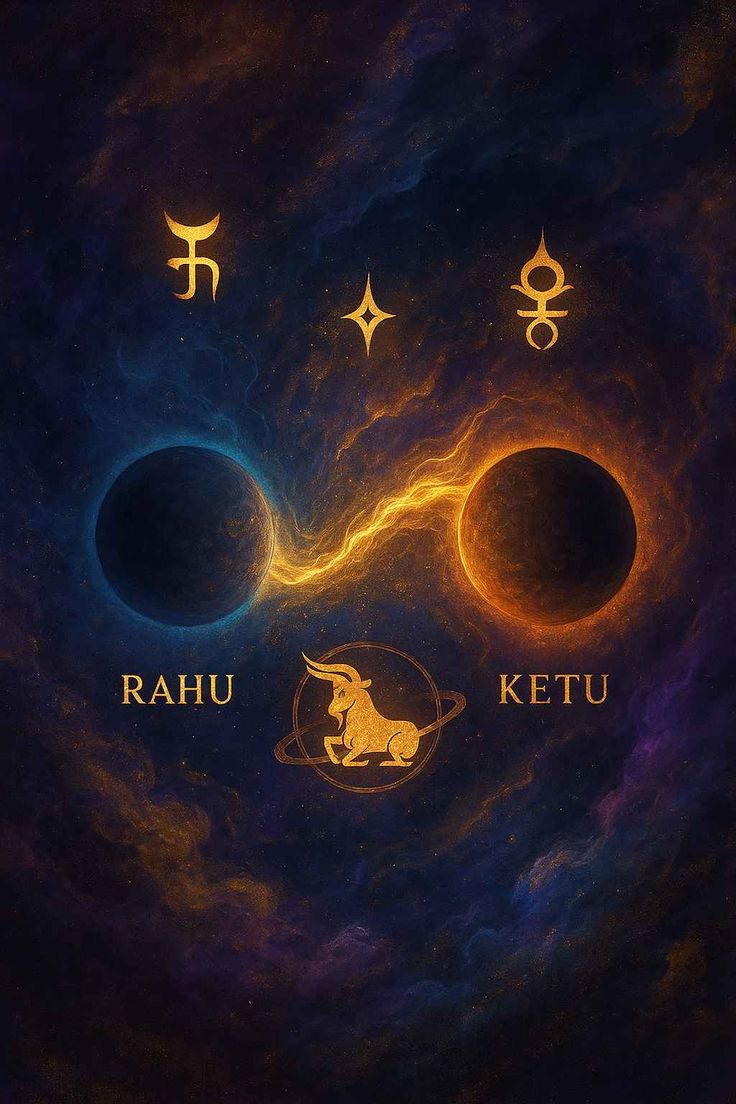
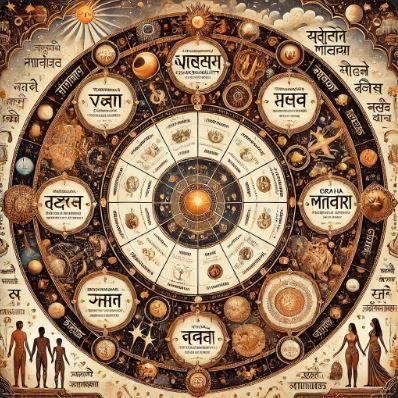
    Rahu and Ketu are among the most talked-about, and most misunderstood, points in Vedic astrology. They are not physical planets. They are the two lunar nodes, the points where the Moon’s path crosses the Sun’s apparent path in the sky. Astrologers call them chhaya grahas, or shadow planets, and give them real weight in a birth chart.

    The myth behind them

    According to the Puranic story, during the churning of the ocean (Samudra Manthan) a demon named Svarbhanu disguised himself as a god to drink the nectar of immortality. The Sun and Moon spotted him and told Lord Vishnu, who cut his head off. The head became Rahu and the body became Ketu. The story is also used to explain eclipses, since Rahu and Ketu are said to chase the Sun and Moon.

    What Rahu represents

    Rahu is the head without a body: it always wants more. In a chart it is linked with:

    • Ambition, desire and worldly success
    • Foreign connections, technology and unconventional paths
    • Obsession, confusion and illusion when it is afflicted

    What Ketu represents

    Ketu is the body without a head: it has no ambition to chase. It is linked with:

    • Detachment, spirituality and past-life impressions
    • Intuition, research and deep focus
    • Sudden endings, isolation or a feeling of “something is missing”

    Rahu vs Ketu at a glance

    RahuKetu
    Core themeCraving and growthRelease and wisdom
    DirectionOutward, towards the worldInward, towards the self
    LessonBalance ambition with ethicsStay engaged while letting go

    Rahu and Ketu Dashas

    Rahu’s Mahadasha lasts 18 years and Ketu’s lasts 7 years in the Vimshottari system. Rahu periods often bring big changes, new environments and a strong push for success. Ketu periods tend to turn attention inward and can feel quiet or unsettling before they bring clarity. Results depend heavily on the house and sign involved and on the rest of your chart.

    What about Kaal Sarp Dosh?

    When all seven planets sit between Rahu and Ketu in a birth chart, many astrologers call it Kaal Sarp Dosh. Opinions differ widely on how serious it is. Many people with this pattern have achieved a great deal, so it should be assessed carefully rather than feared.

    Living well with the nodes

    • Keep your goals honest and avoid shortcuts during Rahu periods.
    • Make space for rest, reflection or meditation during Ketu periods.
    • Treat remedies as supportive practices alongside real effort, not a substitute for it.

    Wondering which house Rahu and Ketu sit in your chart? Book a consultation with Deep Nakshatra for a personalised reading.

  • Janam Kundli Explained: How to Read Your Birth Chart

    Janam Kundli Explained: How to Read Your Birth Chart

    Your Janam Kundli, also called a birth chart or horoscope, is a snapshot of the sky at the exact moment and place you were born. In Vedic astrology it works like a blueprint: it does not tell you what must happen, but it shows your strengths, challenges and the timing of different life phases.

    What you need to make a Kundli

    Three details decide everything:

    • Date of birth
    • Time of birth, as exact as possible
    • Place of birth, which sets the latitude and longitude used for the calculation

    Even a few minutes of difference can change the rising sign, so always use the most reliable birth time you have, such as the hospital record.

    The building blocks of a Kundli

    1. Lagna (Ascendant). The zodiac sign rising on the eastern horizon at your birth. It forms the first house and sets the frame for the whole chart.

    2. The 12 houses. Each house governs an area of life.

    HouseMain themes
    1stSelf, body, personality
    2ndFamily, speech, wealth
    4thHome, mother, peace of mind
    5thChildren, creativity, education
    7thMarriage and partnerships
    10thCareer and public standing
    12thExpenses, foreign lands, spirituality

    3. The nine planets (Navagraha). Sun, Moon, Mars, Mercury, Jupiter, Venus, Saturn, Rahu and Ketu. Each planet has its own nature, and its sign and house placement change how it behaves.

    4. Nakshatra. The Moon’s Nakshatra adds a deeper layer of personality and decides your Dasha sequence.

    5. Dashas. Planetary periods, most commonly the Vimshottari Dasha, show which planet’s themes are active during different stretches of your life.

    How an astrologer reads it

    A good reading never looks at one planet alone. The astrologer studies the Lagna lord, the Moon, the strength of each house, planetary aspects and combinations (yogas), and then checks the running Dasha and current transits. This is why two people with the same Sun sign can have very different lives.

    Common myths about Kundli

    • “A bad planet means a bad life.” Not true. Planets show tendencies, and effort, awareness and good choices matter a great deal.
    • “Kundli is only for marriage.” It is also useful for career direction, education, health awareness and timing decisions.
    • “Free online Kundli is enough.” Software gives the chart, but interpretation needs human experience.

    Final thoughts

    Your Kundli is a tool for self-understanding, not a verdict. When read with care, it can bring clarity to decisions about career, relationships and timing.

    Share your birth details with Deep Nakshatra for a personalised Janam Kundli analysis and a clear, practical reading.

  • What Is a Nakshatra? A Beginner’s Guide to the 27 Lunar Mansions

    If you have ever been asked “What is your birth star?” at a naming ceremony or a wedding, you have already met the Nakshatra. In Vedic astrology, Nakshatras are one of the most personal and revealing layers of your birth chart. At Deep Nakshatra, they sit at the heart of everything we do.

    What exactly is a Nakshatra?

    The word Nakshatra is commonly understood as “star” or “lunar mansion.” The Moon takes about 27 days to travel around the zodiac, so ancient sages divided the sky into 27 equal segments, one for each night’s “stay” of the Moon. Each segment spans 13 degrees and 20 minutes of the zodiac.

    These 27 segments run from Ashwini, the first, to Revati, the last. Every Nakshatra is further split into four quarters called padas, which gives 108 padas in total, a number that is sacred in Indian tradition.

    Why your birth Nakshatra matters

    Your Janma Nakshatra is the Nakshatra the Moon occupied at the moment you were born. Since the Moon represents the mind, emotions and instincts in Vedic astrology, this single placement says a lot about how you think, feel and react.

    Each Nakshatra carries three main layers of meaning:

    • A ruling deity: shapes the Nakshatra’s purpose and spiritual theme.
    • A ruling planet: the nine planets rule the 27 Nakshatras in a repeating cycle and set the starting point of your Vimshottari Dasha timeline.
    • A symbol and nature: for example, a horse’s head for Ashwini or a lotus-like wheel for Chitra, hinting at temperament and strengths.

    How Nakshatras are used in real life

    1. Naming a child: the first syllable of a baby’s name is traditionally chosen from the birth Nakshatra pada.
    2. Marriage matching: Kundli Milan compares the Nakshatras of both partners, including the Nadi and Gana checks.
    3. Predicting life phases: your Nakshatra decides which planetary period (Dasha) you are born into.
    4. Choosing timing: festivals, ceremonies and new ventures are planned around favourable Nakshatras.

    How to find your Nakshatra

    You need your exact date, time and place of birth. A small difference in birth time can move the Moon into a different pada, so accuracy matters. An astrologer can calculate this from a precise birth chart in minutes.

    The bottom line

    Nakshatras are not about fixed fate. Think of them as a map of your natural tendencies, which you can understand, work with and grow beyond. Knowing your birth star is the first step toward knowing yourself better.

    Curious about your own Nakshatra? Book a personal Nakshatra reading with Deep Nakshatra and discover what your birth star says about you.